
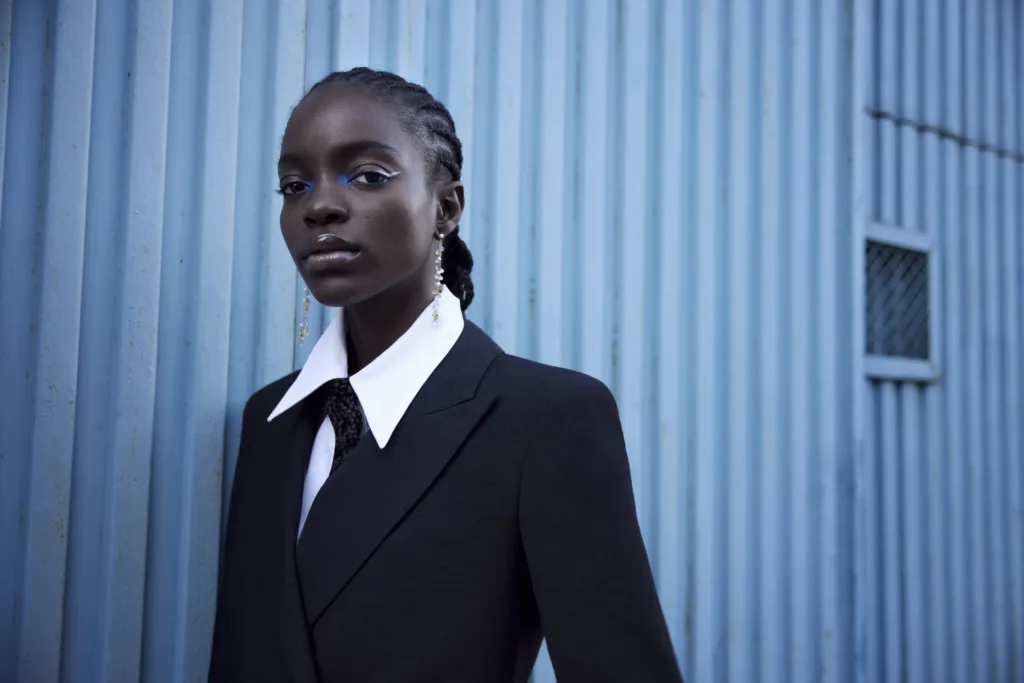
When you look at some of my photographs, you might think of fashion, lighting, and movement. But that’s only part of the story. From the outside, the life of a fashion photographer in Spain can seem like a sequence of perfect images, when in reality it’s far more complex: a constant blend of creativity, technique, organization, and a lot of passion.
Today, I want to open that door and show what really happens behind the camera. I want to share what goes on behind every finished image and what my day-to-day life is truly like as a fashion photographer—a path that began long before I settled in Barcelona.
My Journey Here: The Why Behind a Fashion Photographer in Spain
I strongly believe that an artist’s journey ultimately shapes their eye. You can’t separate the work from the person, nor the photographs from the experiences that lead you to create them. For me, photography began as a way to connect with people.
I was sixteen when I went on an exchange program to a small town in Canada. I didn’t know anyone, and my father gave me my first camera. Without realizing it, it became the perfect excuse to approach others: “Hi, can I take your photo?” From that moment on, there was no turning back.
I later studied photography in California and eventually moved to New York, which became my true school. There, I worked as an assistant to incredible photographers, including Annie Leibovitz. That stage taught me something essential: when you finish school, you feel like you know nothing—and that’s normal. Assisting is where you learn what really matters: how light works, how a set is built, how to perform under pressure. That’s where the real foundation of the craft is formed.
How did I end up living in Barcelona? I originally came to pursue a master’s degree in video, and shortly after, the pandemic hit. Everything slowed down and plans shifted. Over time, the city became a place where it was possible to work, create, and build something long-term. Its rhythm, visual culture, and constant access to creative references eventually made Barcelona the base from which I develop my work as a fashion photographer.
My Vision: Elegance, Strength, and Femininity
In an industry saturated with images, having a clear point of view is essential—not as a strategy, but as a creative necessity. If I had to define my work in a few words, they would be: elegance, strength, and femininity.
I work mostly with women and focus on portraying feminine strength. I’m drawn to subtlety: a posture, a look, a confident attitude. An elegance that comes from feeling comfortable in who you are.
Right now, I’m in a very color-driven phase. I’ve never worked so much with vibrant palettes before. I’m experimenting, combining, and discovering how color can completely transform the emotion of an image. But for that to work, there’s a lot of preparation that almost no one ever sees.
Preparation: Where Everything Begins
Pre-production is the foundation of any shoot. It’s where ideas start taking real shape. Moodboards, references, lighting decisions, conversations with the team—everything happens before the camera is ever turned on.
I remember my years as an assistant in New York, ending the day with my hands destroyed from setting up softboxes. That hard part is also part of the process, and it teaches you to respect every single detail.
Fashion photography is pure collaboration. Styling, makeup, hair, the model—everyone brings something essential. Discussing everything in advance allows me to arrive on set with a clear structure, while still leaving room for things to flow naturally.
Shoot Day: Control and Trust
On set, everything moves fast and with a lot of energy. For me, lighting is everything. I always say that light is the photographer’s brush. That’s why I work almost exclusively with flash—I need control. I love natural light, but not being able to fully control it makes me uneasy. I prefer knowing exactly what’s happening with shadows and volume.
During the session, there’s constant dialogue. I guide the model, but I also leave space for spontaneous gestures. That’s where the most interesting images appear. And when the shoot ends, another equally important phase begins.
Retouching: My Favorite Part
I love retouching. For me, post-production isn’t a task—it’s a pleasure. It’s the moment when I sit with my files and finish sculpting the image.
My workflow is quite specific: first, I use a program like Evoto for basic batch retouching. From there, I move to Photoshop to refine more complex details. The final touch happens in Capture One, where I develop the image, shape the color, and fine-tune the tones so they convey exactly the emotion I’m looking for. This is where the vision born in the moodboard reaches its fullest expression.
The Work You Don’t See: Emails, Portfolios, and Consistency
Beyond shoots and the creative side, there’s a less visible reality: the business side. Making a living as a fashion photographer in Spain means staying in constant motion—seeking new projects and maintaining relationships with clients.
A large part of my time goes into something not very glamorous at all: sending emails. Many emails. Writing, following up, writing again. Showing your work over and over. It’s not inspiration—it’s consistency.
I also spend a lot of time preparing PDF portfolios tailored to each brand. You don’t present the same work to a cosmetics brand as you do to a fashion label or a magazine. Each project requires a different approach, a carefully curated selection, and a clear narrative.
It’s a cycle that never stops: creating images, organizing them, sharing them, seeking new opportunities, and starting again. That unseen work is what sustains everything else and allows you to keep doing what you truly love—creating.
Conclusion: A Life Through the Lens
Being a fashion photographer in Spain is a constant balance between creativity and structure. Between the energy of a shoot and the calm of editing or writing to a new client. It’s demanding, but deeply rewarding.
Being able to dedicate myself to what I’m passionate about is a privilege I never take for granted. I continue working with the same excitement I had when I took my first photographs—eager to keep exploring, learning, and creating images with strength and personality.
Thank you for reading and for joining me on this journey behind the camera.